Dingdang
A map-painting model: image-to-image models I trained to paint isometric illustrated maps from open data. A large master model, D‑Master, sets the standard. A small, fast one, Dingdang, does the volume.
- Type
- Map-painting model (image-to-image, LoRA on open models)
- Latest
- Dingdang v4 + D‑Master v1
- How
- I make the design calls. Claude writes the code and runs the training.
- Map preview
- Coming soon
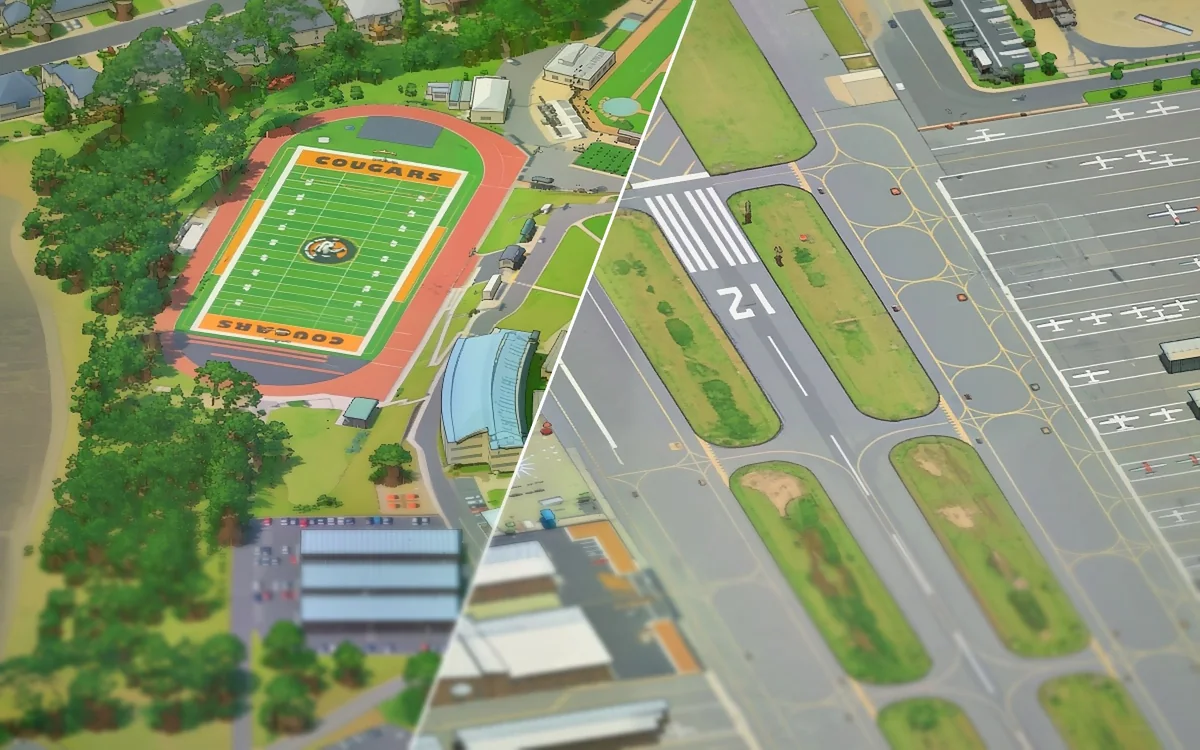
Seven training runs, 149 answers I picked by hand, and a small model that scores 0.777 against its master’s 0.780 at a fifth of the size. Dingdang v4 took 68 minutes and about $4.50 to train. Its first job is a map of my part of the Peninsula.
Rewritten around the model, told by iteration, no dates. D‑Master = Dingdang Master. Hero and gallery images are presentation renders; comparison panels share one treatment. Check that it sounds like you.
Why
I wanted a map of my town in the style of Isometric SF, for a school bus tracker I’m building. The spark was Yadong Xie’s How Pixel Singapore was made. Most maps like that start from Google’s 3D data, which you can’t build a product on or train a model with.
So I needed a painter that works from open data, keeps every building where it really is, and that I’m allowed to train. Nothing off the shelf did all three. A week later, the painter had become the more interesting project. It got a name: Dingdang (叮当), the sound of a bell.
Model card
| Task | Repaint a photo-like render of a place as an isometric illustration, without moving anything |
| Input | 1024 × 1024 tile rendered from lidar, terrain, aerial photos and OpenStreetMap at a fixed camera (azimuth −25°, 30° down), 6.8 pixels per meter. Or a synthetic version with no aerial photo |
| Output | The same tile, painted. About 500 feet of ground per tile |
| D‑Master | Qwen-Image-Edit-2511 (about 20B parameters) + a 590 MB LoRA, 4 steps with a Lightning speed LoRA. About 6 seconds a tile on an RTX PRO 6000 |
| Dingdang | FLUX.2 klein 4B + a rank-32 LoRA. A fifth of D‑Master’s size |
| Training data | Answers picked by me (three rounds, 149 spots), then 909 tiles D‑Master painted on a map I approved |
| Evaluation | Edge fit against the input on held-out spots, plus invented water. Then my eyes |
| After painting | Tiles overlap by 256 pixels and blend with a steep weight, so each pixel comes from one tile. One color grade. Broad color pulled toward the aerial photo |
| License | Both base models Apache 2.0. Training data from public-domain and ODbL sources |
Every version
| Model | Learned from | Training | Fit | Verdict |
|---|---|---|---|---|
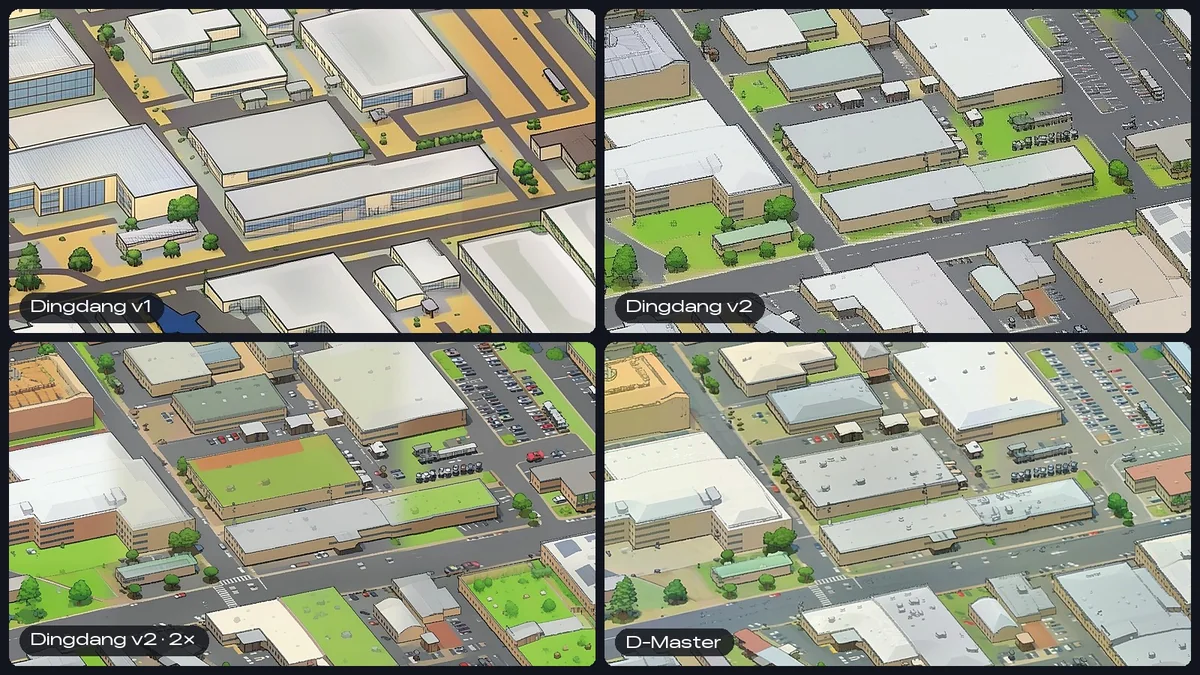
| Dingdang v1 | 41 pairs of its own earlier output | 1,500 steps · 1 h 46 min · A40 | — | Fast and stable, but capped by its targets |
| Dingdang v2 | 46 spots I picked × 3 color shifts | 1,500 steps · 76 min · RTX 6000 Ada · $2.40 | 0.70 | Kept step 500. Later steps painted water as grass |
| Dingdang v3 | 38 picks at 2×, plus a synthetic input | 1,000 steps | 0.66 | Learned to paint without aerial photos |
| D‑Master v1 | The same 38 picks + fill-the-gap samples, 190 in all | 8 epochs · Qwen-Image-Edit | 0.75 | In use, with one color grade (0.76) |
| FLUX.2 [dev] test | The same 190 samples | 1,520 steps · 4.6 h · RTX PRO 6000 | 0.70 | Brightest colors, invents things. Non-commercial |
| D‑Master v2 | 65 new picks × 5 + the old 190 | 4 epochs · 1 h 53 min | 0.79 | Best score, see-through roofs. Shelved |
| Dingdang v4 | 909 tiles painted by D‑Master | 3,000 steps · 68 min · RTX PRO 6000 · $4.50 | 0.78 | In use. Kept step 2,000 |
Fit is edge agreement with the real place on spots the model never saw, from 0 to 1. Each row was measured on its own test set, so compare within a round, not across.
How it paints
- 01Render the factsAerial photos draped over lidar and terrain, roads and water from OpenStreetMap, rendered at twice the final resolution
- 02Check the inputLook for holes, blanks and false water before renting a GPU
- 03Score each tileSlope, tree cover, buildings, roads and shorelines give a difficulty
- 04Dingdang firstDingdang v4 paints every tile. Hard tiles, and tiles where it invented water or white patches, go to D‑Master
- 05Blend and gradeOverlapping tiles, one color grade, broad color matched to the aerial photo
The render owns the facts. The model only owns the style.
Design calls
- Fix the input before the model. Lagoons painted as lawn, houses in the marsh, see-through houses, a sunken bridge, white fog. Every one was in the input.
- Only a person picks the answers. The machine filters out the obvious failures. Every answer a model learned from, I looked at.
- Earlier is often better. Three of the seven runs were best before the end of training. Later checkpoints start improvising.
- Color is a grade, not a lesson. Training to change color also changed shapes. One grade after painting changed only color.
- Pretty but not honest is out. A model that paints a greener lawn than the real dry hill loses, however good it looks.
Part 1 · Before v1, and v1Why a model at all
Trying everything except training. Each attempt left a rule behind.
-
Before v1
Google, then code, then a reference
I started on Google’s 3D map, then read the terms and rebuilt everything on open data: USGS lidar and terrain, USDA aerial photos, OpenStreetMap, and my own renderer. A first AI repaint on my laptop turned the school roof into a river, so geometry became the render’s job, never the model’s. I had ChatGPT repaint five test tiles to pin down the look, and kept them as a reference only.
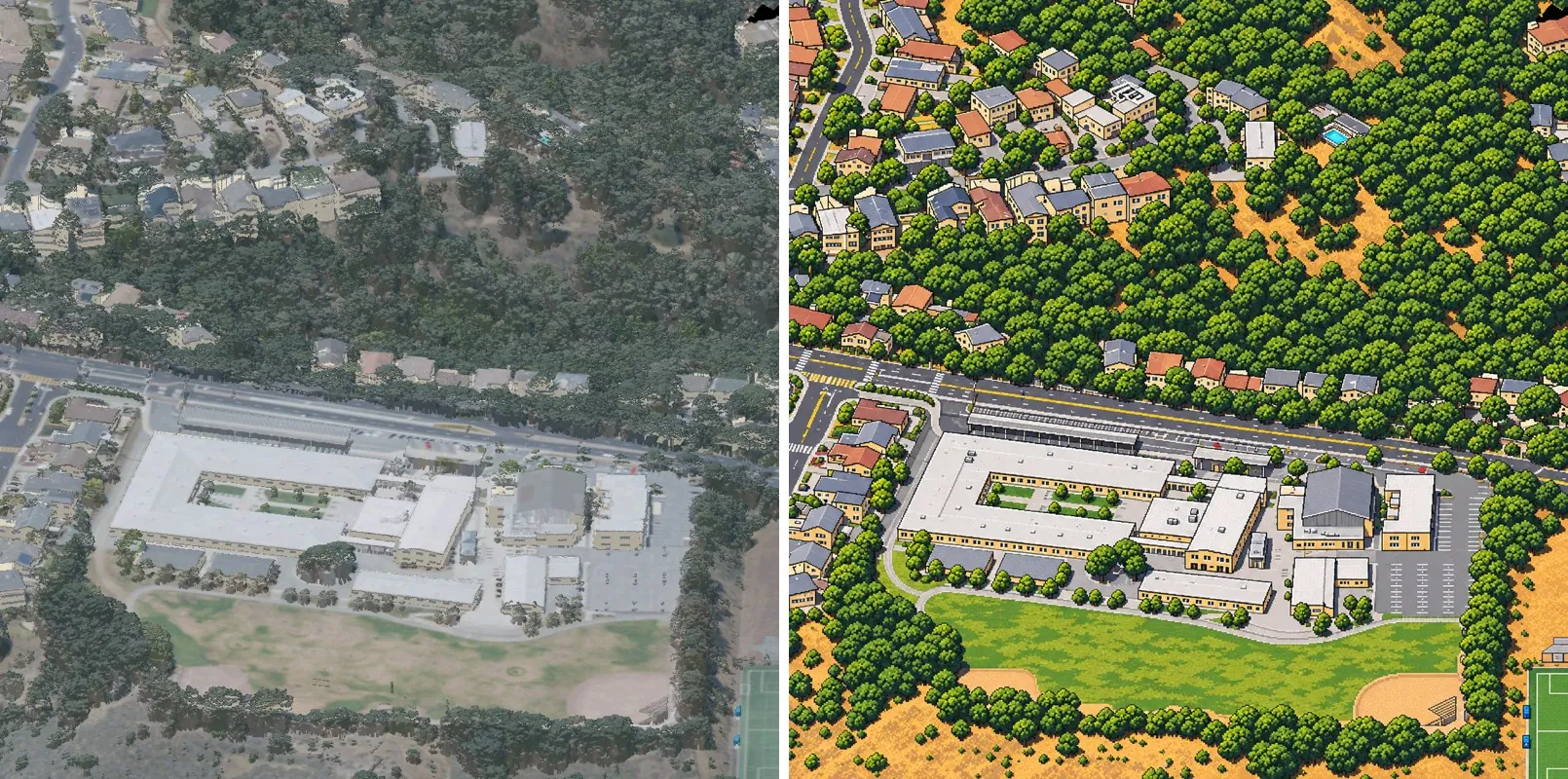
The target lookMy open-data render, and ChatGPT’s repaint. A reference, never training data. LessonFidelity before looks. The style can change everything except where things are.
-
Before v1
Code alone, and why I got angry
Coloring the render with code alone stayed 100% true and looked flat. After hours getting the look right in ChatGPT, getting back something worse made me angry. So: rent a GPU, an A40 at 60 cents an hour, and run FLUX.2 klein, an open model that allows commercial use, with my render as one image and the style as another.
Each fix exposed the next problem. Given a full style image, it copied the content and drew the school into the woods, so the style became a card of 25 color swatches. Given the raw render, it turned parking lots into pools. Once the prompt said “blue water”, water showed up everywhere. Five rounds into the school, I almost went back to Google. I stayed, and lowered the bar to “every block is right”.
-
v1
Dingdang v1
Isometric NYC had fine-tuned its own model on about 40 examples while I was still patching prompts. So I trained a LoRA on 41 pairs: my renders in, the best repaints out. 1 hour 46 minutes on an A40. Repainting the corridor went from half an hour with dozens of retries to 16 minutes, no invented water, no ghosts.
Code onlyEvery roof in the right place, but flat. 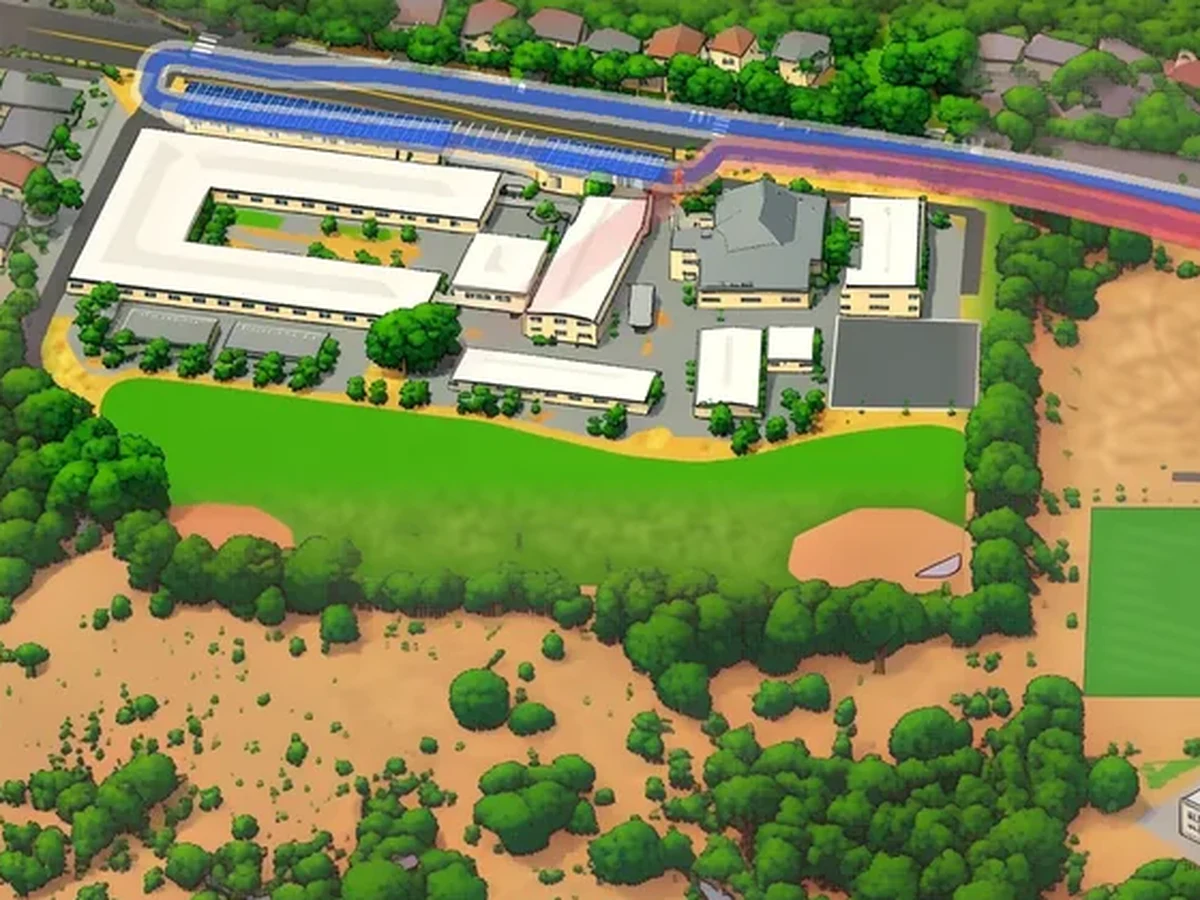
Dingdang v1Same school, same layout, painted by the first model. LessonA model is only as good as what it learns from. v1 learned from my own repaints, so they were its ceiling.
Part 2 · v2 and v3Learning from a person
I moved the project to Claude Code and stopped patching. Better input, answers I chose myself, and a way to measure.
-
v2
The input is the biggest lever
Same six spots, five approaches, twenty minutes on an A100, under a dollar. Changing the input beat changing the model. Given a photo-like render instead of flat palette colors, plain klein drew cars, crosswalks, parking lines and single trees right away. The palette never had them, so no model could paint them. Qwen-Image-Edit looked the most like a game, but invented ponds and took 82 seconds a tile.
The Oracle lagoon looks green in aerial photos, and every model painted it as lawn. Instead of fixing a model, we painted the water into the input. DecisionWhen the output is wrong, fix the input first.
-
v2
A score that catches moved houses
Looking isn’t enough at a thousand tiles. The score finds edges in the input and in the painting, house outlines, curbs, shorelines, and checks they line up. Painted edges with nothing under them are invented. Input edges with nothing painted are missed. A second score counts invented water.
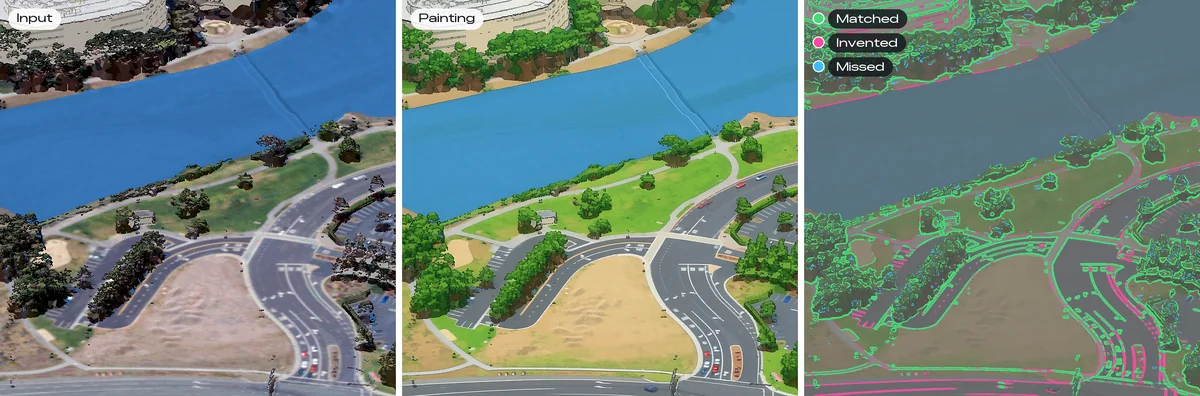
What the score seesGreen lines up with the real place. Pink is invented, blue is missed. -
v2
I became the judge: Dingdang v2
Claude picked 65 spots across the map, had the model paint three candidates for each, and built a picking page. I picked 46. Each pick became three training pairs with small color shifts, so the model learns shapes, not one exact palette: 138 pairs, rank 32, 1,500 steps, 76 minutes, about $2.40.
We saved three checkpoints. Step 500 scored 0.70, up from 0.58. Steps 1,000 and 1,500 dropped to 0.60 and started painting water and the black map edge as grass. DecisionTraining longer isn’t better. Pick by how faithful it is on spots it never saw.
-
v3
Twice the detail, and Dingdang v3
Upscaling a finished tile only traced blurry outlines sharper. Painting at twice the resolution gave clean outlines, parking lines and single trees. So everything moved to 6.8 pixels per meter, and I picked again at 2×: 62 spots, four shuffled candidates each, 38 picked.
v3 also learned a second input with no aerial photo: blurred satellite-like color, one color per roof, roads and lawns from OpenStreetMap. Most cities don’t have free 2-foot aerial photos. Five rows per spot (photo, two color shifts, synthetic, synthetic shifted), 1,000 steps. 0.66 on 29 held-out spots, against 0.58 for v2, and no more islands in open water.
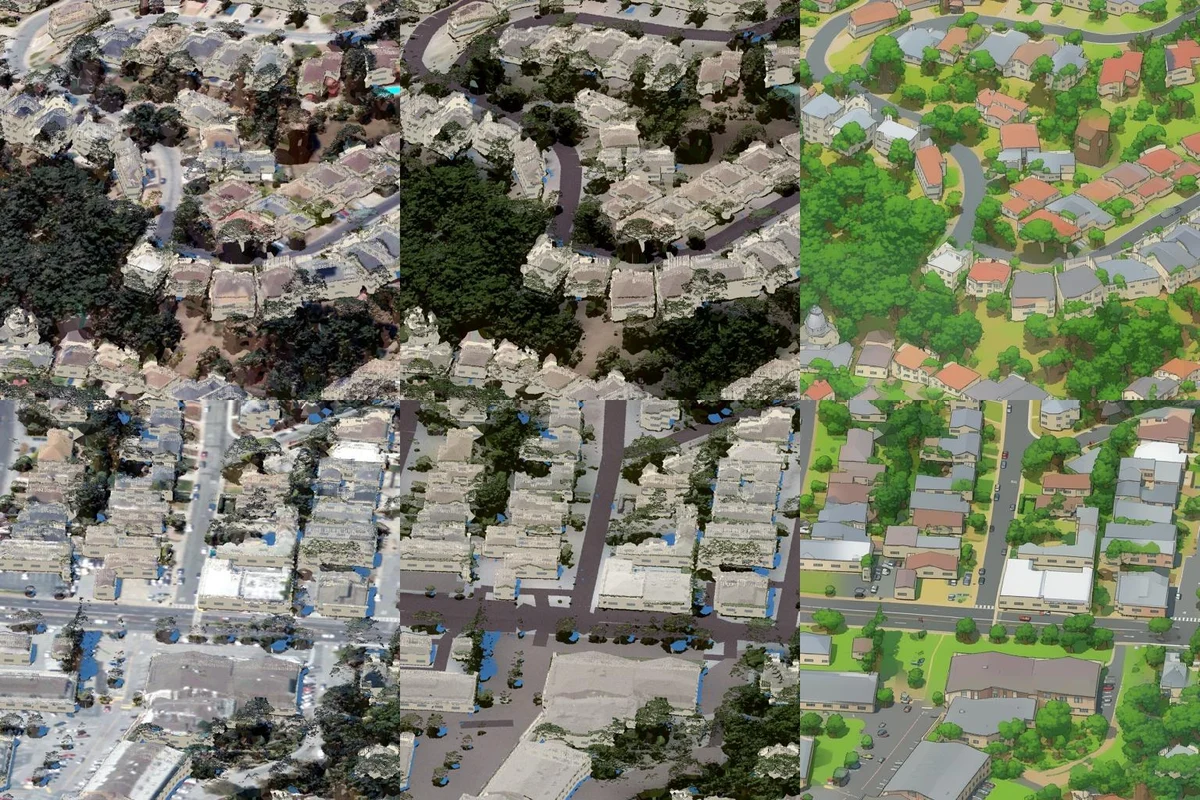
Without aerial photosPhoto-like input, synthetic input, and what v3 paints from it.
Part 3 · D‑MasterThe master
A small model can only be as good as its answers. So we trained a big one, D‑Master, to write better answers.
-
D‑Master v1
A big model as the master
Qwen-Image-Edit-2511, about 20 billion parameters, trained with the same 38 picks plus “fill the red box” samples: the map around, a gap in the middle, paint the gap so it joins without a seam. 190 samples, 8 epochs. Untrained it scored 0.41 and drew cartoon towns. Trained, with a 4-step Lightning add-on, 0.75, the best of everything. At 30 steps it fell to 0.62: more passes, more improvising.
It repainted the wetlands first, with real tidal channels instead of invented trees and houses. When Claude toned them to match the old map’s bright green, I said: “Wait, I think D‑Master’s colors are right.” DecisionNever make something wrong just to keep things consistent.
-
FLUX.2 test
A bigger model, and my call
I asked whether there was a stronger master. FLUX.2 [dev], 32 billion parameters, same family as Dingdang. Its license is non-commercial, so only a test: the same 190 samples, 4.6 hours. The brightest colors and crispest lines, and also houses in the forest, dirt trails paved over, dry hills turned into lawn. By epoch 8 it moved the layout, 0.70 down to 0.52.
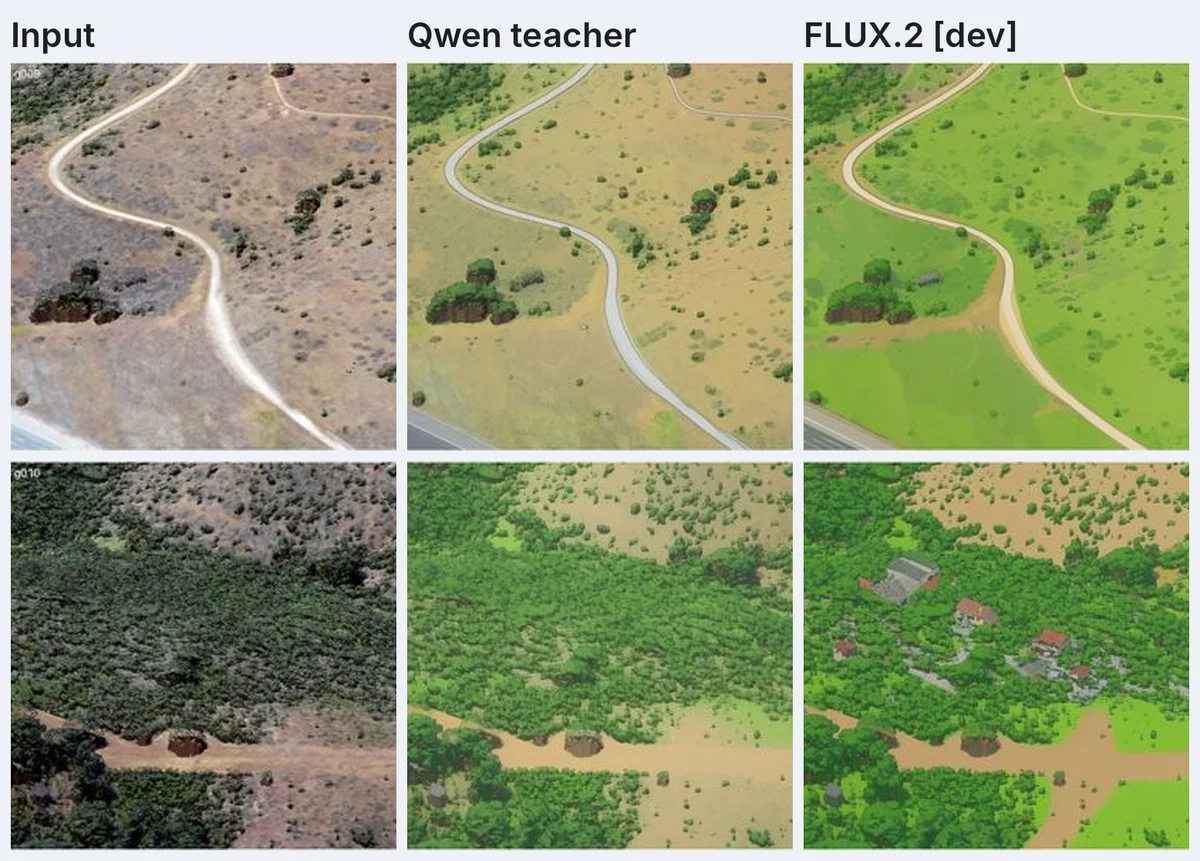
Faithful vs livelyFLUX.2 turns dry grass into lawn and builds houses in the forest. My call: keep Qwen, borrow the others’ strengths without borrowing pixels. Average saturation was 0.12 for Qwen and 0.16 for FLUX.2, so one grade (k = 1.47) closes the gap. 8 steps instead of 4 for sharpness. And 72 new spots where the last round failed: wetlands, waterfront, industrial.
-
D‑Master v1
D‑Master’s own gold standard
D‑Master painted all 72 spots at 4 and 8 steps on the fixed input. A machine filter threw out tiles that moved or invented water. One slip: the grade made blue-gray roofs bluer, and the filter took them for water. Scores now use the image before grading.
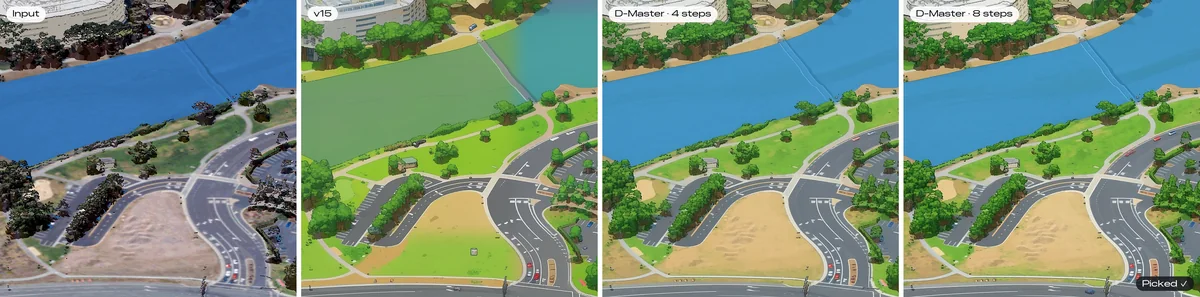
One row of the picking pageA waterfront park. I picked D‑Master at 8 steps. ResultOut of 66 spots I picked 65: 45 at 8 steps, 20 at 4 steps, the old map not once.
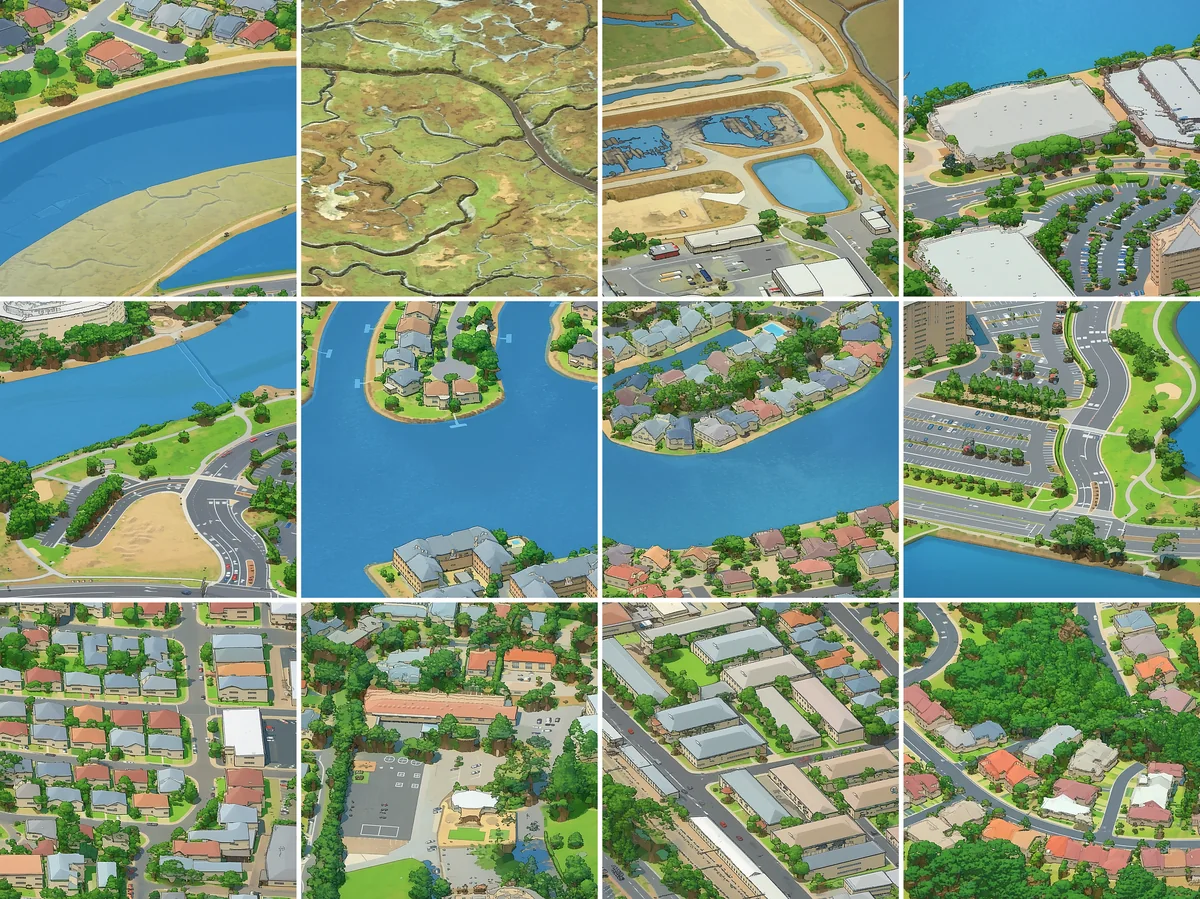
Twelve of the 65 answersMarsh, lagoons, offices, parks and homes. This is what the models learn from. -
D‑Master v2
A better score, a worse master
D‑Master v2 trained on 515 samples: the 65 new picks, each as one direct sample and four fill-the-gap samples, plus the old 190 so it wouldn’t forget. Epoch 2 scored 0.79, first on all twelve test spots. Then I looked at the roofs. Half-learned, with the aerial photo’s roof texture showing through. The score only checks edges, so it rewarded that. Epoch 3 had clean roofs and 0.72.
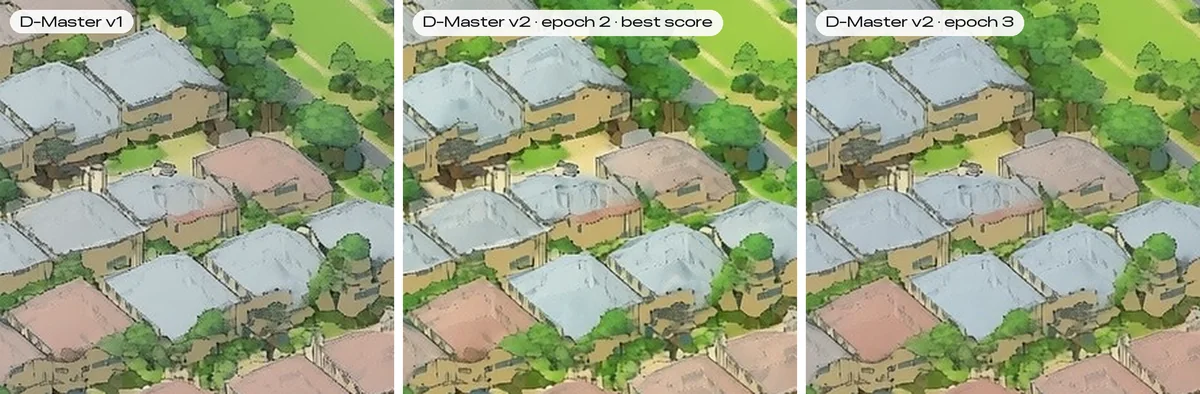
Look at the roofsThe highest score has the aerial photo bleeding through. I asked: can’t we have the color, the fit and clean roofs at once? We could. What v2 had learned was color. D‑Master v1 plus one grade: 0.761, the saturation I wanted, no change to shapes. DecisionKeep D‑Master v1 and the grade. When judging a master, always look at the roofs.
Part 4 · v4The apprentice
D‑Master painted the whole map. Then it trained its apprentice, and the apprentice went somewhere new.
-
v4
Dingdang v4
D‑Master had just painted about 2,000 tiles of Belmont and Redwood Shores, and I’d approved the map. Those became the answers: 909 tiles after dropping test tiles, their neighbors and the worst 10%, 1,282 training rows. FLUX.2 klein, 3,000 steps, 68 minutes. Step 2,000 scored 0.777 on 88 held-out tiles, 30 easy, 30 medium and 28 hard. D‑Master scored 0.780. Step 3,000 overfit.
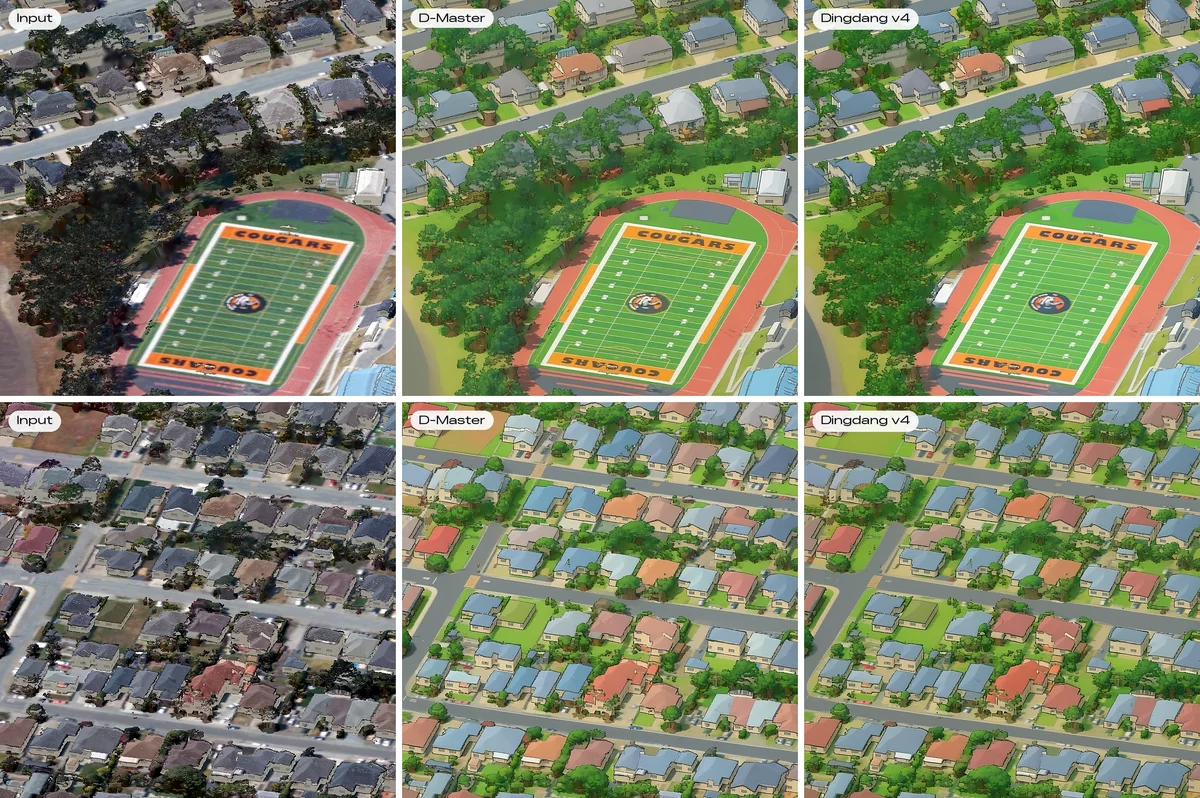
Input · D‑Master · Dingdang v4Half Moon Bay, ground neither model had seen. Dingdang is a fifth of D‑Master’s size. Its predecessor still showed in open water: given a tile of pure water, v3 painted an island with two houses. v4 painted water. LessonAn apprentice learns its master’s best work, not its mistakes, because every answer was already approved.
-
v4
Who paints what
My idea: score every tile, give the easy ones to Dingdang and the hard ones to D‑Master. Six factors: slope, tree cover, how dense and uneven the buildings are, how winding the roads, shorelines and bridges, and how that kind of area went before. Belmont came out 707 easy, 752 medium, 222 hard, 38 landmarks.
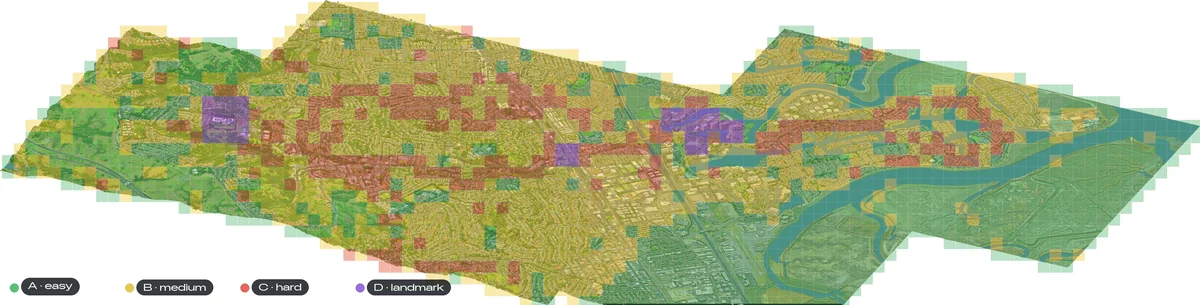
Difficulty1,719 tiles. Hard tiles follow the hills and the bus routes. The line was supposed to go where Dingdang falls behind. Measured, the gap didn’t grow with difficulty at all.
-
v4
New ground: Highway 92
A strip west to the ocean: forest, farmland, a reservoir, a beach town, about 1,200 tiles. Both models painted every tile so we could compare them where neither had trained. The first rule swapped in D‑Master whenever Dingdang scored 0.05 lower. Tile by tile, those swaps mostly copied dark forest texture from the photo. Dingdang was as good or better.
DecisionDingdang paints everything. D‑Master takes only hard tiles and tiles where Dingdang invented water or a big white patch: 39 tiles, about 3%. A GPU run takes less than half the time.
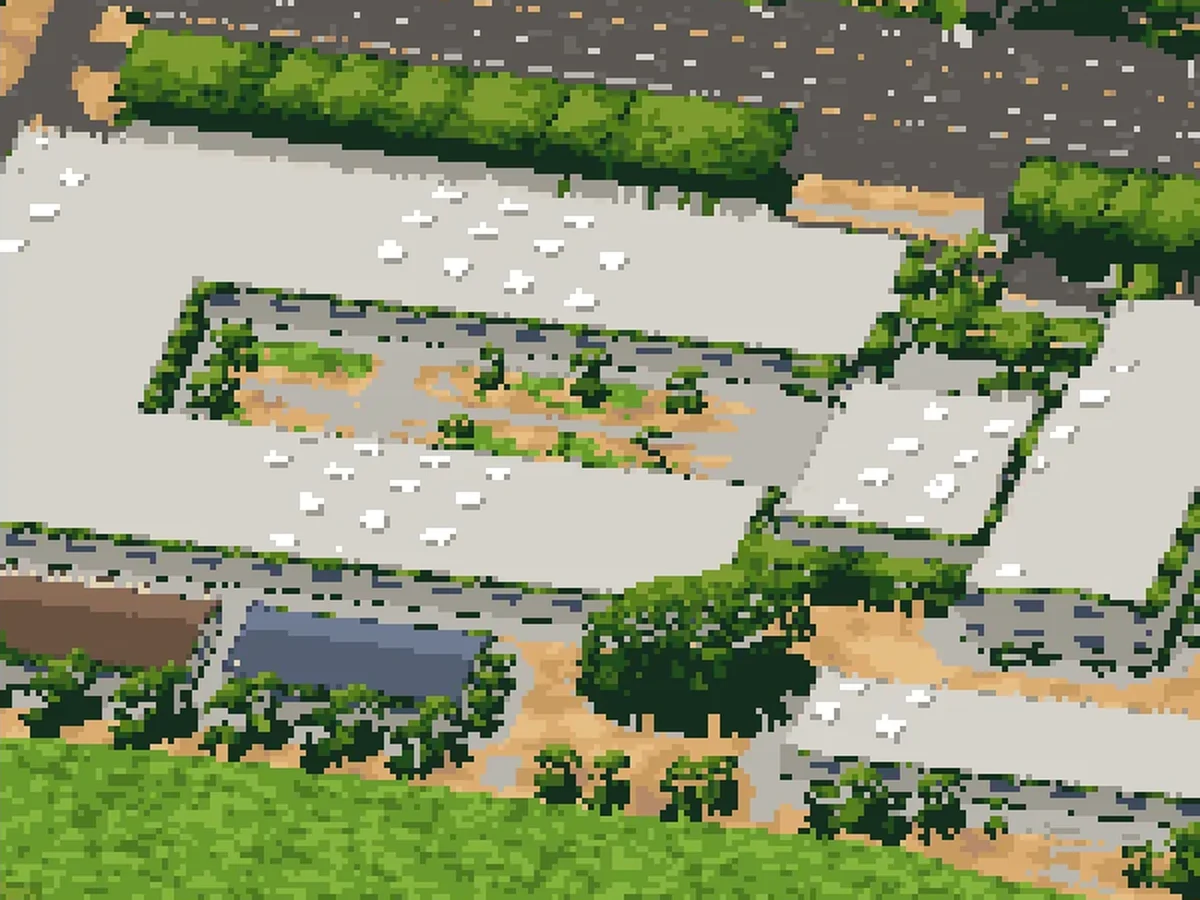
Two input bugs showed up on new ground. Plowed fields and deep shadows have no plant cover, so the water detector painted them blue. And behind tall trees the renderer left pure-black holes, which both models filled with white fog.
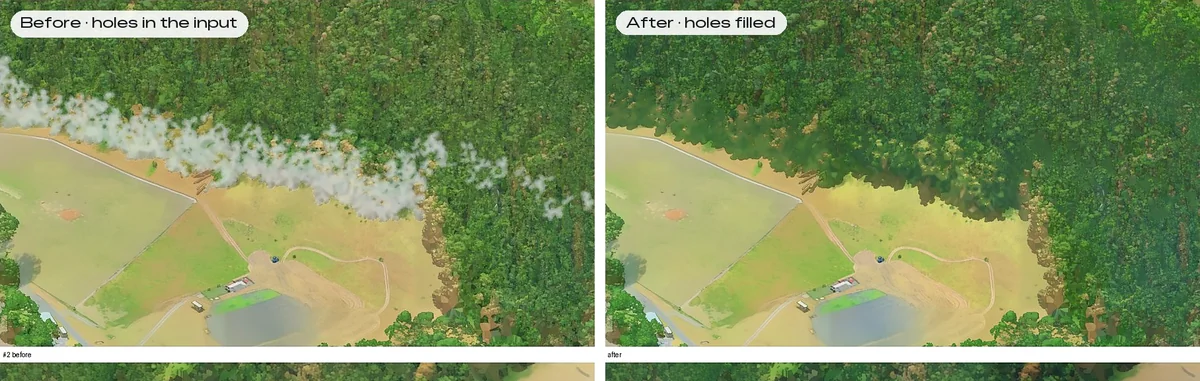
White fogBoth models painted it, so it was in the input.
Painted by Dingdang
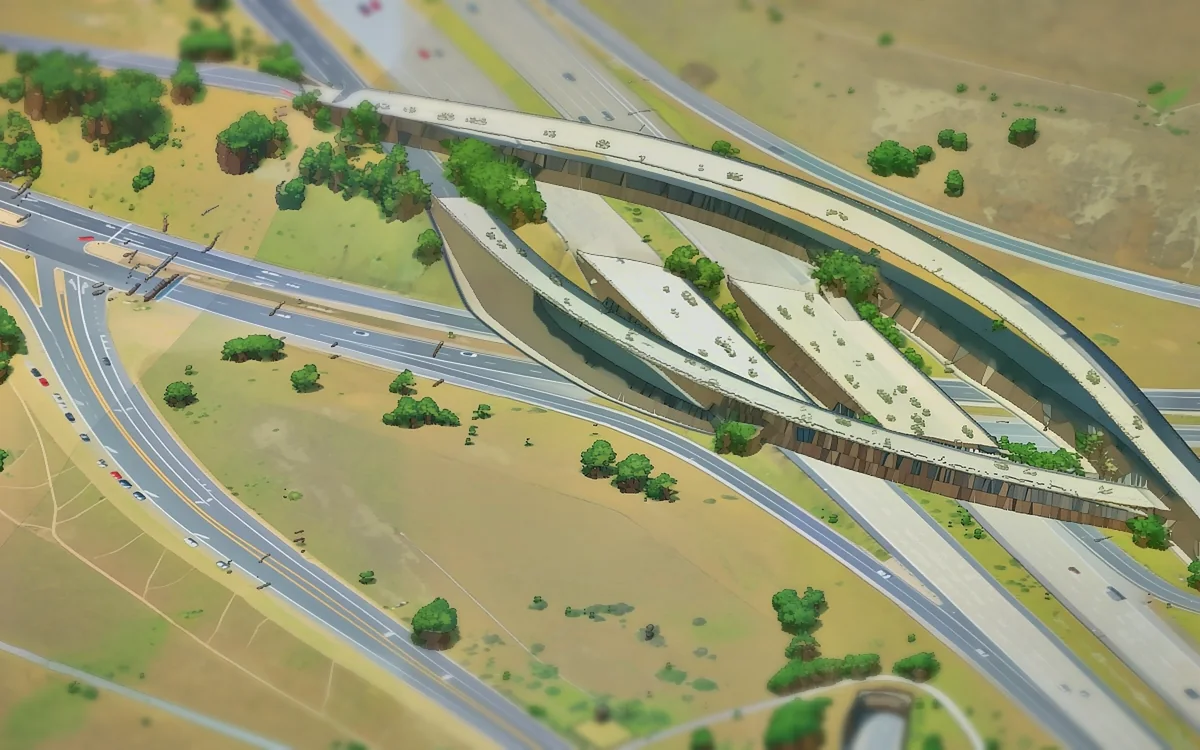
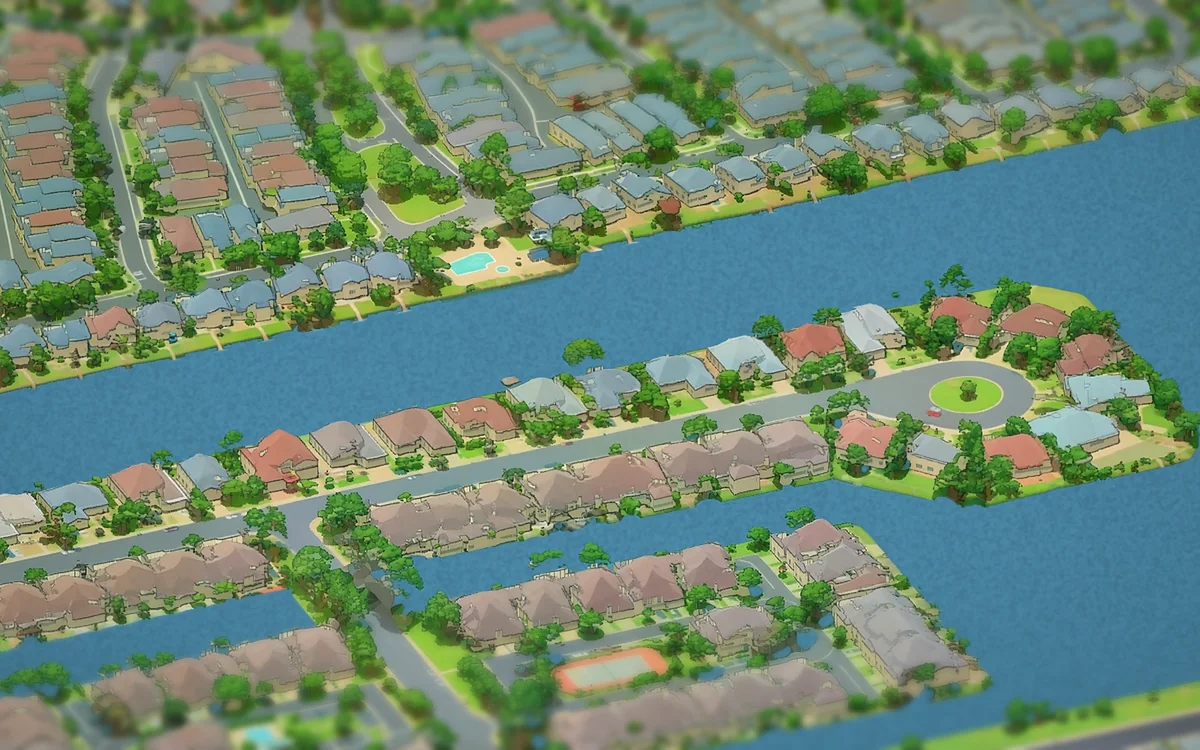
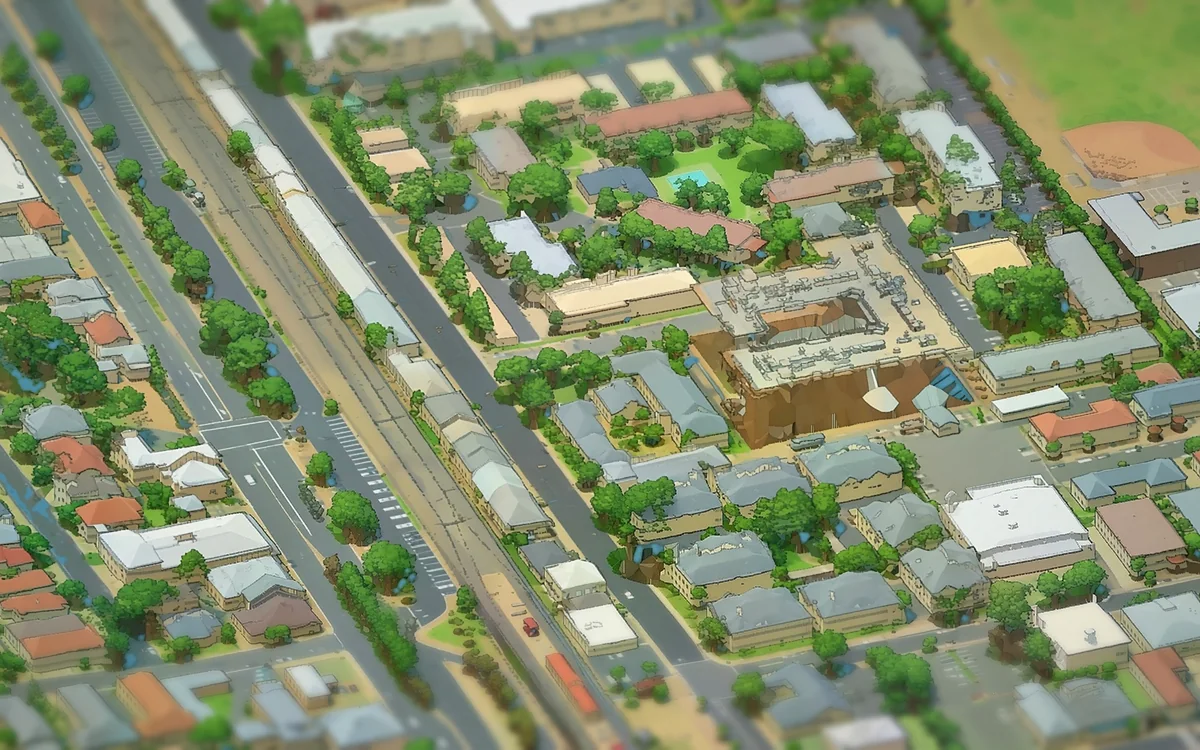
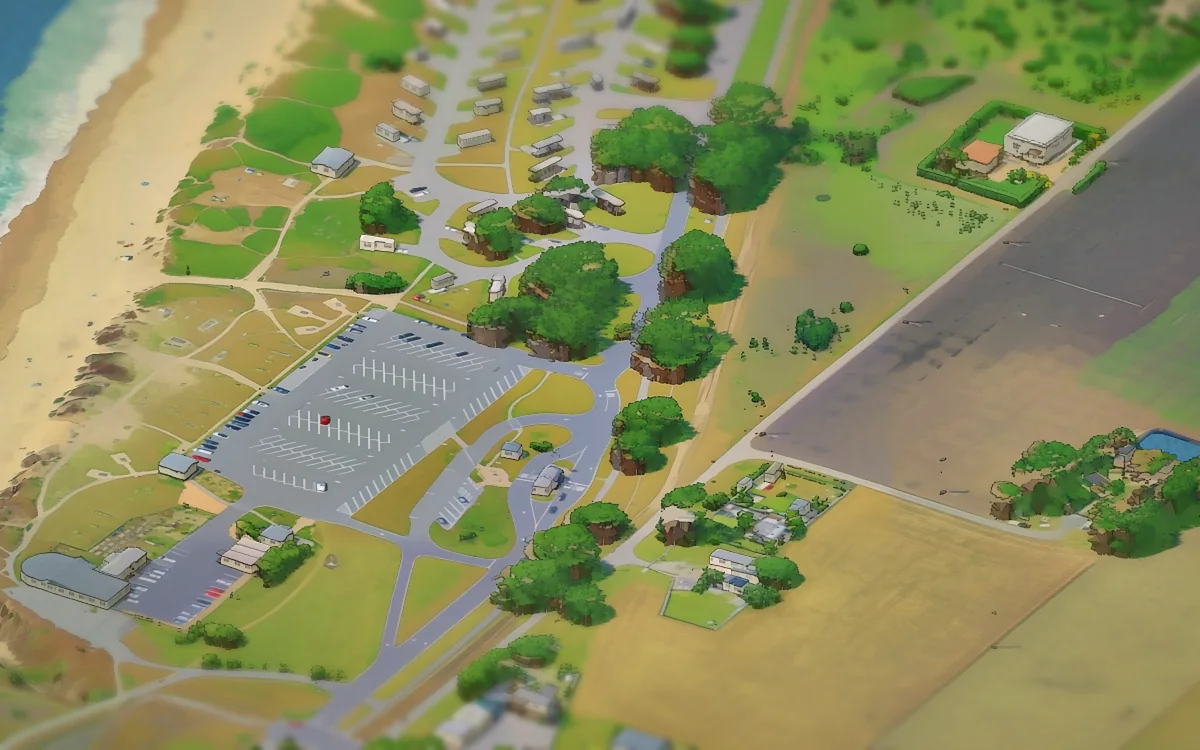
The full map preview comes once the map is filled out to a clean rectangle.
How we made calls
- 01Look first, score second.The score catches things in the wrong place. Whether it looks good is my call.
- 02Only a person picks the answers.Three rounds, 149 picks, every one looked at.
- 03Shared mistakes start in the input.Five times so far.
- 04Global problems get global fixes.Color by one grade. Broad color by the aerial photo.
- 05Test small, then scale.Six or twelve spots first, cents to a few dollars, before a whole map.
Questions I asked along the way
Why a master and an apprentice?
D‑Master paints best, but it needs a 96 GB graphics card. Dingdang is a fifth of the size, faster and cheaper to run. Training Dingdang on D‑Master’s approved work is distillation: like a chef cooking hundreds of dishes for an apprentice. On everyday ground Dingdang now matches D‑Master, so D‑Master only takes what a checker flags.
What’s a LoRA?
A big model is a painter who can paint anything, in a generic style. Retraining all 20 billion parameters is expensive, and it can forget what it knew. A LoRA leaves the painter alone and trains a small add-on, like a pair of custom glasses. D‑Master’s is 590 MB against a 40 GB model. The model can wear two pairs at once: one for the style, one for speed.
Why 4 steps, not 30?
These models start from noise and refine it pass by pass: big color areas, then outlines, then detail. Plain Qwen needs about 30 steps, over a minute a tile. A speed add-on brings it to 4 or 8. More isn’t better: at 30 steps D‑Master improvised more and its fit dropped from 0.75 to 0.62.
What exactly is a gold standard?
A pair of images: a photo-like render of one spot, and the same spot painted, picked by me. Training means showing the model hundreds of pairs until it learns: see the left, paint the right.
| Round | Spots | Candidates from | Picked | Trained |
|---|---|---|---|---|
| First | 65 | Base klein with a prompt | 46 | Dingdang v2 |
| At 2× | 62 | v15 and others | 38 | Dingdang v3, D‑Master v1 |
| D‑Master’s own | 66 | D‑Master at 4 and 8 steps, v15 | 65 | D‑Master v2 |
| The approved map | 909 tiles | D‑Master | Whole map | Dingdang v4 |
Can Dingdang paint Chongqing?
Not yet. Chongqing has no free high-resolution aerial photos or lidar like the US, OpenStreetMap there is incomplete, and the model has never seen 40-story towers, a city on mountains or a light rail running through a building. What’s ready: the synthetic input v3 learned, and a pipeline that works for any city. The bottleneck is data, not the model.
What went wrong
- The school in the woods. Given a full style image, the model copied its content. Style references became swatch cards.
- Pools in the parking lots. Given the raw render, the model turned lots into pools. A prompt that mentioned water put it everywhere.
- Islands in the sea. At 2× a tile covers half the ground, and in open water v2 drew an island with a house on every tile.
- Hidden files. macOS added hidden files to an archive and the training code loaded them as weights.
- A 45-minute shutdown. An auto-stop hidden in the GPU setup killed training halfway, twice.
- Weights that vanished. The GPU machine had no persistent disk, so stopping it erased the FLUX.2 weights.
- A filter that saw water in roofs. Grading made blue-gray roofs bluer, and good tiles were thrown out.
Still not right
- Small landmarks. Canopies, clock towers and solar panels come out soft. Those are built by hand.
- Asphalt. v4 sometimes paints roads a little blue-gray, and slightly darker overall.
- No synthetic input in v4. It needs that again before any city without aerial photos.
- Made-up fronts. Open data has no side views, so windows and doors are believable, not real.
Data and licenses
My current reading of each source. A proper legal review comes before any commercial use.
| Source | Used for | License |
|---|---|---|
| Qwen-Image-Edit-2511 | Base of D‑Master | Apache 2.0 |
| FLUX.2 klein 4B | Base of Dingdang | Apache 2.0 |
| USGS 3DEP terrain and lidar | Heights in the input | Public domain |
| USDA NAIP aerial photos | Colors in the input | Public domain |
| OpenStreetMap | Buildings, roads, water | ODbL · © OpenStreetMap contributors |
| FLUX.2 [dev] | One comparison test | Non-commercial. Not in any training data |
| ChatGPT images | Style reference only | Not used for training |
| Google 3D Tiles | Early tests only | Dropped |
What’s next
Map data © OpenStreetMap contributors. Terrain, lidar and aerial photos: USGS and USDA.